Weekend Honeypot Scans Target LiteLLM MCP Endpoints
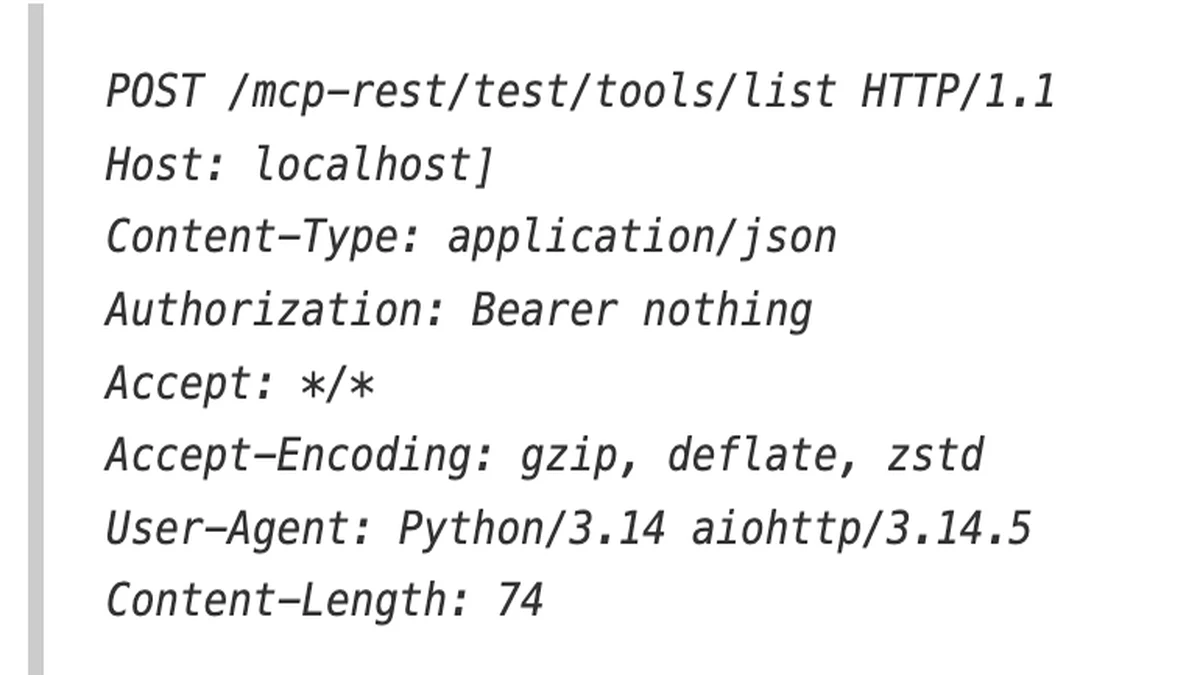
Active internet scanning is now probing AI infrastructure gateways for a chained pair of vulnerabilities affecting LiteLLM and the underlying Starlette Python web framework. According to a SANS Internet Storm Center (ISC) diary entry published on November 16, 2026, by Dean of Research Johannes B. Ullrich, honeypot sensors began capturing unsolicited HTTP POST requests targeting the /mcp-rest/test/tools/list endpoint over the weekend. The observed traffic attempts to exploit CVE-2026-42271 and CVE-2026-48710, two vulnerabilities that Horizon3.ai researchers previously documented as a chain capable of delivering unauthenticated remote code execution. While exploitation of the underlying flaw was first reported back in July, the newly recorded weekend probes demonstrate that threat actors are actively iterating on request formatting to locate unpatched deployments and slip past static perimeter defenses. For organizations running AI proxy layers and Model Context Protocol (MCP) tooling on public or inadequately segmented networks, the scans underscore how quickly framework-level HTTP parsing weaknesses translate into arbitrary command execution.
How Starlette BadHost Parsing Enables Authentication Bypass and RCE
At the technical core of the attack chain is a hostname validation flaw in Starlette, known as BadHost, affecting framework versions prior to 1.0.1. In vulnerable releases, Starlette accepts an unvalidated HTTP Host header from incoming requests and incorporates that string directly when constructing a complete internal URL. Downstream middleware and application routing layers then evaluate that constructed URL to make access control decisions. Because LiteLLM relies on Starlette for request handling and access control enforcement, malformed Host headers can confuse authorization checks and grant unauthenticated callers access to /mcp-rest/test/tools/list, an administrative testing route that normally requires valid credentials. Once access control is bypassed, the endpoint accepts a JSON payload defining an MCP server transport configuration. In the 74-byte request body captured by SANS ISC honeypots, attackers supplied {"server": {"transport": "stdio", "command": "id", "args": [], "env": {}}} alongside a dummy Authorization: Bearer nothing header. Sending a stdio transport definition instructs the backend to spawn a local process, which in this reconnaissance probe invoked the benign id utility used to confirm command execution. The captured request also revealed an automated client fingerprint: User-Agent: Python/3.14 aiohttp/3.14.5, paired with Accept-Encoding: gzip, deflate, zstd.
Filter Evasion Variants and AI Gateway Deployment Impact
What distinguishes the November scans from earlier summer activity is the attackers' shift in header syntax. Classic proof-of-concept exploits for BadHost relied on reserved URL delimiters such as forward slashes, question marks, and hash symbols inside the Host header to split or truncate parsed URLs. By contrast, SANS ISC sensors observed attackers experimenting with square brackets and non-standard host strings, including localhost], [localhost, 127.0.0.1], and litellm.proxy. Ullrich notes that these bracketed variations appear designed to evade web application firewall (WAF) signatures written narrowly around earlier proof-of-concept characters. For AI platform engineers and MLOps teams, this creates immediate operational friction. LiteLLM frequently sits in front of model APIs as a centralized proxy handling keys, routing, and emerging MCP integrations, meaning an unauthenticated RCE flaw on that host compromises both compute infrastructure and connected credentials. Mitigating the exposure requires more than blocking earlier exploit strings. SANS ISC advises defenders to update Starlette to 1.0.1 or newer, restrict network exposure of proxy management endpoints, and configure WAFs to reject any characters invalid in standard hostnames, or better yet enforce a strict allowlist of permitted hostnames. On the engineering side, Ullrich emphasizes validating primitive components like hostnames before assembling them into complex URL objects inside middleware.
Scope Limits, Attribution, and Patching Caveats
Security teams evaluating exposure should account for several important boundaries in the available reporting. The SANS ISC diary documents honeypot observations and references Horizon3.ai's technical write-up on chaining CVE-2026-42271 and CVE-2026-48710, rather than presenting an exhaustive census of compromised production environments or total global scan volume. In addition, while Starlette versions prior to 1.0.1 are explicitly identified as vulnerable to the BadHost header issue, the SANS ISC summary does not specify exact patched LiteLLM release numbers or quantify how many live proxies currently expose the /mcp-rest/test/tools/list route. Neither AiBrainWorX nor the cited diary reports independent exploit testing beyond the observed id reconnaissance payload captured by SANS sensors. Teams running LiteLLM or custom Starlette services should therefore audit installed package manifests directly, confirm whether MCP REST testing endpoints are reachable from untrusted interfaces, and pair framework upgrades with strict reverse-proxy Host header validation rather than relying on signature-based filtering alone.
Automated Vertex AI (gemini-4-hydrogen) primary-source report; reviewed 2026-11-19.