Cloud Management Breach and Operational Scope
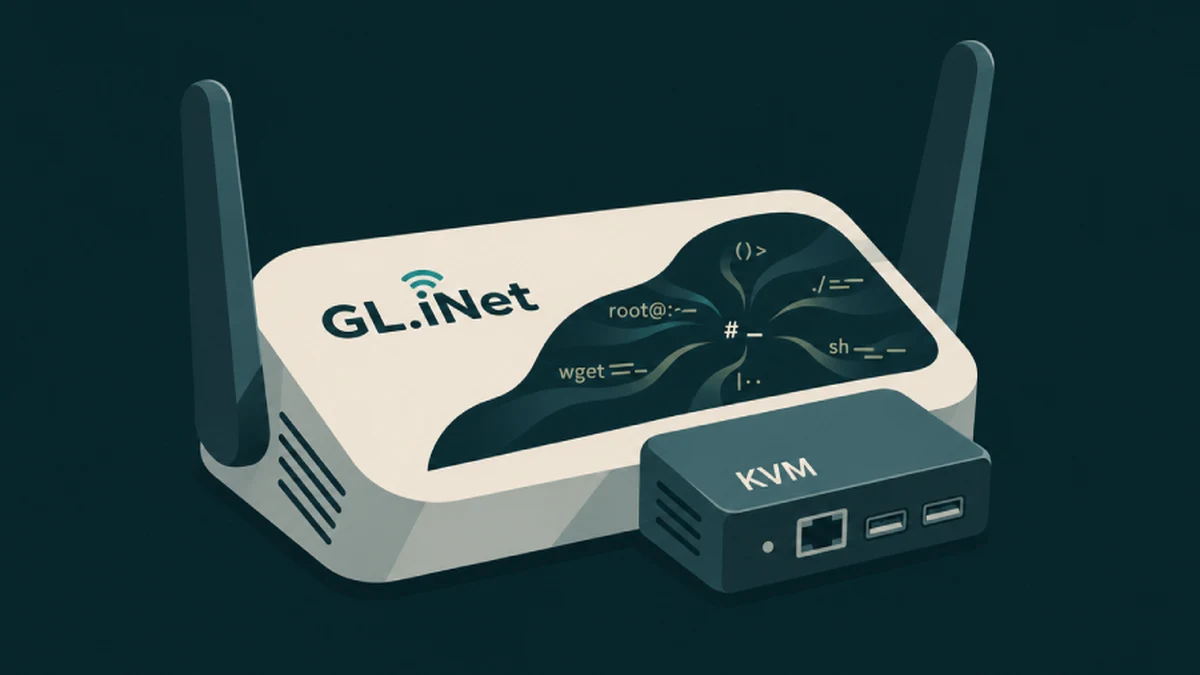
Attackers exploited a vulnerability in GL.iNet's GoodCloud remote management service to deploy malware onto customer travel routers and remote-access KVM devices, according to reporting by The Hacker News citing a vendor security notice updated on November 23, 2026. GL.iNet identified and fixed the cloud-side flaw on Friday, November 20, blocking the access path the attackers used so devices can no longer be compromised through that route. However, patching the cloud platform does not remove malware from hardware that was already infected, and GL.iNet is still investigating whether host computers attached to compromised KVM units were affected.
While GL.iNet is emailing customers it identifies as impacted, the company warned owners not to wait for direct notification before inspecting devices. It also cautioned that hardware models missing from its firmware table are not necessarily unaffected and warned administrators against installing firmware meant for a different model.
GoodCloud Client Architecture and Firmware Specifications
Independent forensic findings from RemoteToHome Consulting point to an input-validation flaw inside the router-side GoodCloud client, though GL.iNet has not confirmed that root cause. According to the consultancy's technical analysis, a handler in the client parses two values from an incoming cloud message and executes them as root through the shell without checking them. RemoteToHome traced the unchecked code back to at least December 5, 2024, in a GL-MT3000 firmware release, noting that it runs whenever GoodCloud is enabled regardless of whether the AstroWarp SD-WAN feature is active, though its presence since 2024 does not establish when attacks began.
On Friday evening, RemoteToHome verified a memory-resident, root-level reverse shell on a managed GL-AXT1800 router running firmware 4.8.3 with GoodCloud switched on, connecting outbound to 170.39.226[.]219; two additional owners reported identical shells on the same model and firmware. On GL-MT6000 routers, the same command executed without completing its connection, while other managed routers ran a one-off command searching for KVM implant files and reporting back to that address. After researchers filed an abuse report, the hosting provider suspended the server behind 170.39.226[.]219 and preserved its data. Separately, a GL-RM1 KVM owner reported that starting Thursday, the unit fetched a script and two programs from 66.245.219[.]252, queried the lookalike domain gl-inet[.]top, scanned the local network, and repeatedly contacted 65.20.71[.]131; the owner did not keep the downloaded files, and the KVM infection vector remains unconfirmed.
GL.iNet published stable remediation firmware across its router and KVM lines: 4.11.1 for the GL-MG1300, GL-MT3000, and GL-MT6000; 4.10.3 for the GL-E5800; 4.10.2 for the GL-BE3600 and GL-BE9300; 4.9.3 for the GL-BE14000; 4.9.1 for the GL-BE6500, GL-MT3600BE, and GL-MT5000; 4.8.7 for the GL-BE10000; 4.8.4 for the GL-AX1800, GL-AXT1800, GL-SFT1200, GL-X3000, and GL-XE3000; and 4.7.14 for the GL-MT2500, GL-MT2500A, and GL-X2000. Fixed KVM builds are 1.10.3 for the RM1, RM1V2, RM10, RM10RC, RM1PE, and RM4PE, and 1.8.7 for the RMQ1, with GL-MT3000 and GL-RM1 builds confirmed live on GL.iNet's download pages.
Detection Workflows and Administrator Impact
Because KVM hardware provides remote keyboard, video, and mouse control over attached systems, compromised units create direct risk for developer workstations and managed infrastructure. GL.iNet advises inspecting computers connected to an infected KVM for unfamiliar programs, accounts, startup items, and unusual network activity. Until firmware is updated, RemoteToHome advises disabling GoodCloud only after establishing another remote management path, as toggling it off halts the client without cleaning an already-infected device.
Detection workflows require inspecting processes before rebooting or upgrading, since the reverse shell leaves no files behind and disappears upon restart. On routers, administrators can sign in to LuCI under System, Advanced Settings, Status, and Processes to search for tmp/.log, or run ps | grep tmp via SSH. On KVMs, operators should open Toolbox, Terminal, and Access on the appliance itself and run ps -a | grep tmp on the RMQ1 or ps -aux | grep tmp on other models. Researchers and forum warnings also caution operators to confirm /bin/netstat still links to busybox before running netstat, as attackers may have swapped in a malicious binary.
Remediation Divergences and Operational Caveats
Recovery guidance diverges between vendor and forensic investigators. GL.iNet's updated notice states that the security firmware removes incident malware without requiring a factory reset while keeping user settings. However, RemoteToHome's analysis of a GL-RM1 upgraded to the earlier 1.10.2 build with settings kept found that the password file, SSH keys, and user directory containing boot-time scripts carried across, leaving untested whether attacker-planted scripts survive. For suspected compromises, RemoteToHome recommends reinstalling firmware without keeping settings and treating all VPN keys, Wi-Fi and admin passwords, cloud credentials, and SSH keys as exposed.
Significant visibility gaps persist. GL.iNet's check targets processes containing crond -i /tmp/.log, yet that marker was absent on the GL-AXT1800 with the verified reverse shell, and an unofficial community check script remains unreviewed by GL.iNet while requiring administrative privileges. Infected device counts, attacker identity, and how GoodCloud was breached remain unknown, and no CVE identifier existed as of publication. RemoteToHome also reported a second, unpatched GoodCloud client weakness on Sunday and uncovered an unrelated legacy backdoor on 49 managed routers installed between September 2025 and May 2026.
Automated Vertex AI (gemini-4-hydrogen) primary-source report; reviewed 2026-11-23.