Benchmark charts usually measure peak tokens per second, but anyone who keeps a local AI setup running in a bedroom, living room, or small office quickly learns that acoustics, idle power draw, and heat matter just as much as raw speed.
The 450-watt tower versus the 45-watt desk box
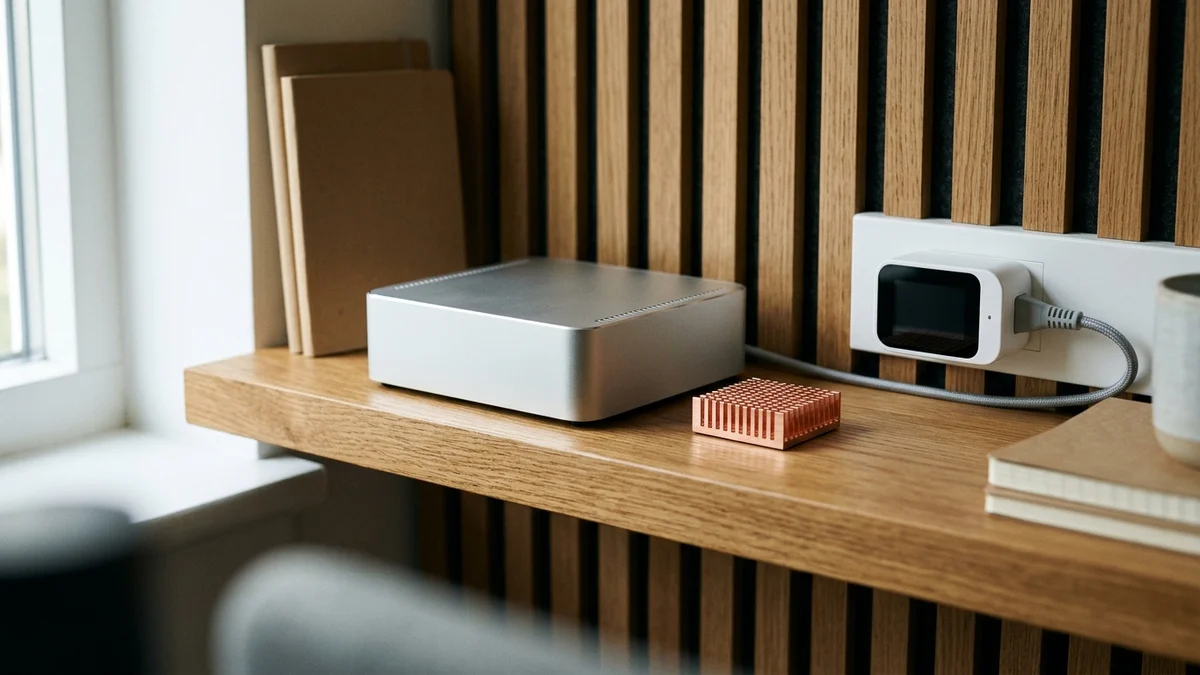
A dual-GPU workstation can chew through prompts quickly, yet it also acts like a space heater under load and pulls noticeable idle wattage 24 hours a day. Unified-memory mini-PCs and Apple Silicon or Ryzen AI boxes sip power at idle, stay nearly silent during background indexing or voice transcription, and still hold large quantized models in shared memory.
Matching hardware to the job
For heavy batch jobs or image/video rendering, discrete VRAM still wins on throughput. For everyday coding help, home automation, and private document search, a quiet, power-efficient box you never hesitate to leave turned on often gets used ten times more.
Original AiBrainWorX long-form editorial feature published November 16, 2026.