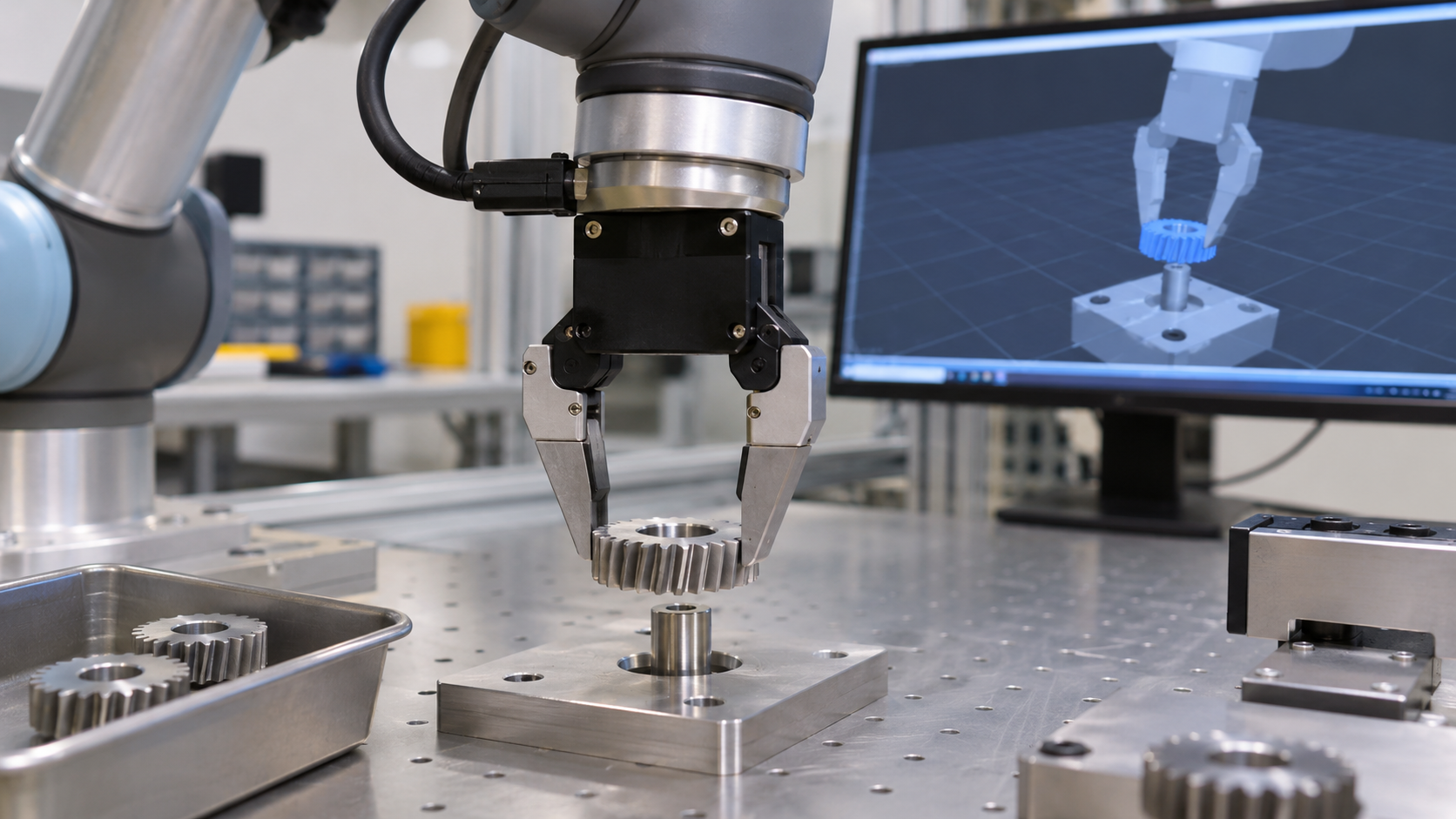
NVIDIA introduced GR00T 2, Isaac Lab 3.0 and new robot-evaluation tools at the Conference on Robot Learning. The company's November 9 announcement focuses on teaching robots to manipulate objects and assess their performance in simulation.
From practice to action
NVIDIA describes GR00T 2 as a world action model built on Cosmos. It says the model uses human and robot data to help robots learn manipulation skills. The company reports completing 40 of 50 evaluated tasks at least once without task-specific demonstrations, and claims an average 71% success across 50 tasks with one demonstration per task, rising to 95% with five. These are NVIDIA-reported results, not independently verified measurements.
Those figures should not be read as a promise that the system can perform reliably in an arbitrary factory. Task selection, hardware, the meaning of success and the conditions of evaluation all matter when comparing robotic systems.
Training and evaluation
Isaac Lab 3.0 adds workflows for setting up training environments, choosing simulation physics and applying reinforcement post-training. NVIDIA also described Isaac Lab-Arena, plus the DexBench and VABAR benchmarks for evaluating manipulation across varying conditions.
Simulation gives teams a way to repeat scenarios and examine failures without risking equipment. The hard question remains how consistently those skills transfer to physical objects, changing environments and machines outside a controlled demonstration. We have not tested the model or tools.
Original reporting based on the linked source; no independent product or benchmark test.