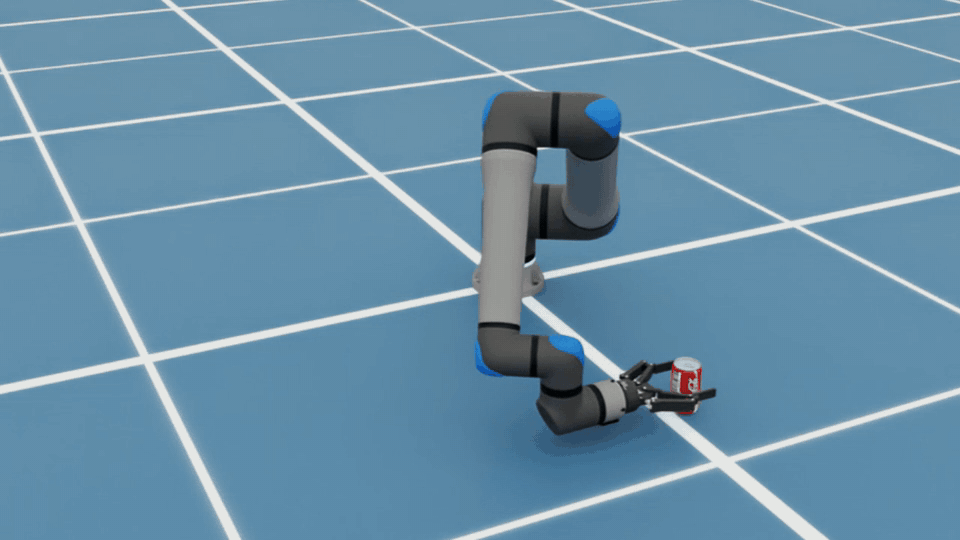
NVIDIA has published a walkthrough showing how simulation-ready 3D assets can be assembled into a robot pick-and-place task. The example uses an UR17G arm, Robotiq 2F-140 gripper and beverage can in Isaac Sim 6.2, with an AI agent helping produce the task controls.
The demonstration is a simulation, not evidence that a physical robot can repeat the task reliably. NVIDIA’s own description says the can begins at a known position, the robot is fixed, the workspace is clear, and the controller follows predefined waypoints without replanning.
Why the asset properties matter
In robotics software, a convincing 3D model is only a starting point. A simulator also needs a useful description of joints, masses, collisions and drives. SimReady Central provides OpenUSD assets with authored simulation properties and profile-validation evidence; developers still assemble the scene, provide task logic and test how the parts behave together.
The walkthrough instructs readers to inspect joint limits, move the arm and gripper, and check that the can rests on its surface before attempting a grasp. NVIDIA says its example uses agent-generated controls but explains that the scene can also be assembled and checked manually. Generated code and results can vary.
From a demo to a useful experiment
The source notes that the simplified can does not model deformation or liquid motion, and that its simulated drive-effort setting is not calibrated to a real gripper’s fingertip force. Limited collision checks and fixed object positions further narrow the result. These limitations are important when considering the gap between a successful visual demo and a deployed physical system.
The practical value is a reproducible starting point for examining how an asset, scene and controller fit together. Teams should verify each asset’s own terms and validation report, examine generated code, and test any adaptation against their own hardware and safety requirements. AiBrainWorX has not run the walkthrough.
Original reporting. Primary sources reviewed November 14, 2026; no independent hands-on test claimed.