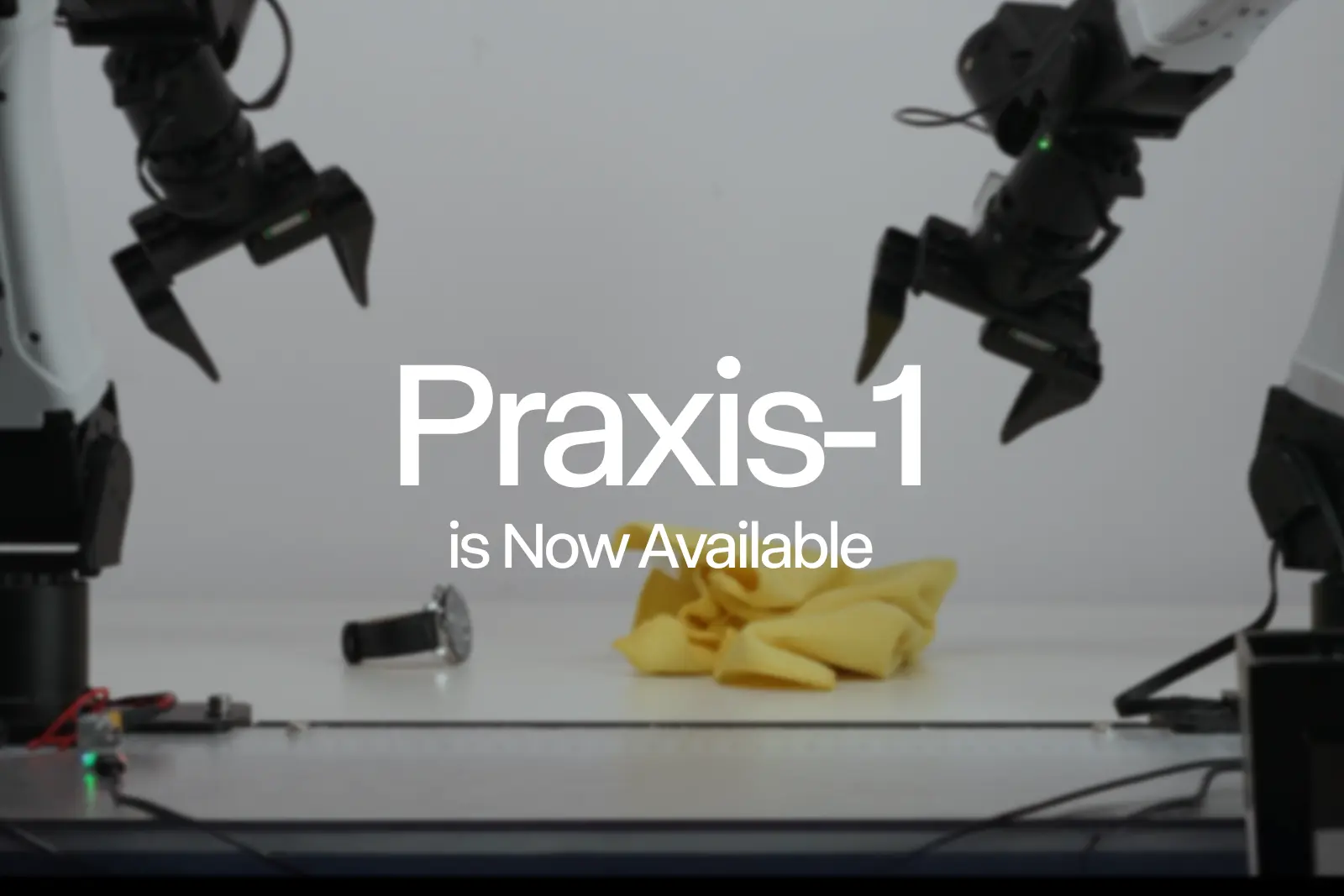
Runway has released Praxis-1, a 27-billion-parameter world-action model that uses video pretraining to help predict robot actions. Its November 11 announcement says the weights, inference code and fine-tuning code are available under Apache 2.0, with distinct checkpoints for different robot setups.
The system takes camera images, a task instruction and the robot’s current pose. Runway’s technical report describes predicting a short segment of future video alongside a chunk of actions. A robot can then execute that chunk and supply new observations for the next one.
Checkpoints and hardware are separate questions
The DROID checkpoint targets a Franka-style arm. Runway also documents YAM and SO-100/SO-101 adaptations, plus selected NVFP4 variants. Hugging Face lists Apache 2.0 for the DROID and SO-101 repositories, but also asks users to accept conditions and share profile information before obtaining the files. Check the exact artifact and separate dependency licenses.
The project’s documented simulation quick start calls for an NVIDIA CUDA GPU with at least 80 GB of memory. The existence of a quantized checkpoint does not establish that the complete workflow will fit a 12 GB card. Hardware requirements vary by checkpoint and execution path; we have not run the model.
What the demonstrations show
Runway reports a 46.2% success rate across 1,200 RoboLab-120 episodes for the DROID model. That is a publisher-reported result under a particular benchmark, not an independent test by AiBrainWorX or a guarantee on an unfamiliar robot. The company’s report also describes adapting to the SO-101 using community datasets and identifies limits with ambiguous targets and long multi-step instructions.
Robot policies operate physical equipment, so a promising simulation or video does not establish safe deployment. Evaluate the camera setup, control limits and failure behavior on the intended hardware. Our model profile and repository profile link to the original materials.
Original reporting; primary sources reviewed November 14, 2026. No independent hands-on test claimed.