Tencent YouTu Lab and research collaborators have made a DSpine draft checkpoint available for Qwen3.8-27B, giving developers another approach to speeding model generation. The model card describes a five-layer draft model with a 16-token block and an 8,192-token sliding window; the project lists support for the Qwen target in November 2026.
This checkpoint is a helper for the larger target model, not a standalone replacement for Qwen3.8-27B. It proposes candidate tokens that the target model checks. When several candidates are accepted in one verification pass, a serving system may produce tokens with fewer expensive target-model passes. The benefit depends on acceptance rate and the cost of drafting and verification.
What DSpine changes
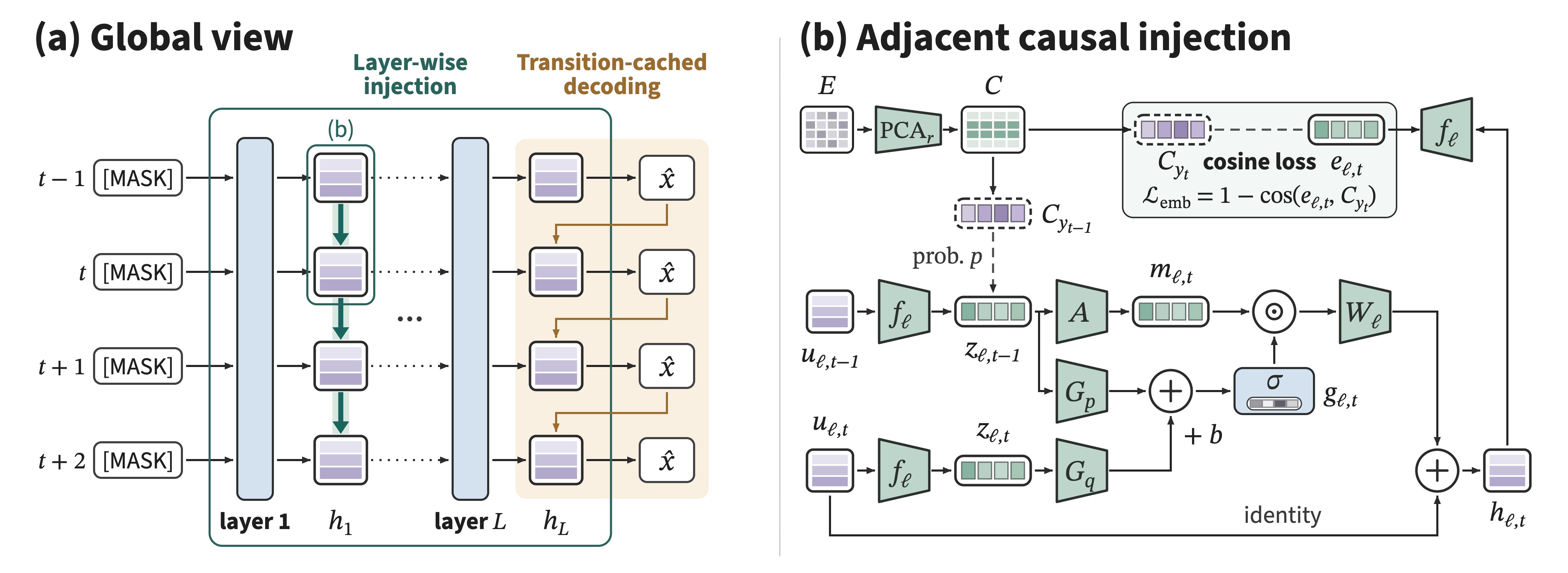
The researchers describe a technique called adjacent causal injection. During parallel drafting, a position receives a feature predicted for its predecessor at each layer, allowing information about neighboring predictions to flow through the draft network. Their paper describes the design and evaluates earlier target models; the project repository now lists checkpoints for Qwen3-8B and Qwen3.8-27B.
The 27B card compares DSpine with a DFlash2 checkpoint using SGLang, BF16, FlashAttention 3 and a concurrency of eight. It describes a 16-token DSpine draft block and an eight-token DFlash2 block, plus additional verification settings. Those details matter when interpreting the results: a longer accepted draft does not automatically mean the same end-to-end speed advantage in every system.
Reading the speed claims
In the publisher’s replay tests, DSpine reports higher aggregate throughput than ordinary autoregressive decoding and, in the listed comparisons, DFlash2. These are the researchers’ results for their specific workloads and configuration. Aggregate concurrent tokens per second are not the same as the single-user speed of an RTX 3060, and another quantization, runtime or workload may produce a different outcome.
AiBrainWorX has not run DSpine, verified its numerical behavior or compared it with DFlash2 on local hardware. In particular, the published tests do not establish compatibility or speed gains in the AiBrainWorX launcher or its Strata setup.
Availability and practical limits
The draft model card identifies Apache 2.0 for the checkpoint. The target model, runtime and other dependencies have their own licenses and hardware requirements. The project documents an SGLang plugin requiring Python and CUDA, and separately lists Apple Silicon support through MLX-based tooling. Check the exact version and target-model support before attempting integration.
For local AI users, speculative decoding is worth watching because it can improve generation without replacing the target model. It also adds another model and software path to maintain, so its value needs to be measured against extra memory, setup complexity and the workload it actually serves.
Original reporting based on linked research and model card; no independent benchmark or local test.