
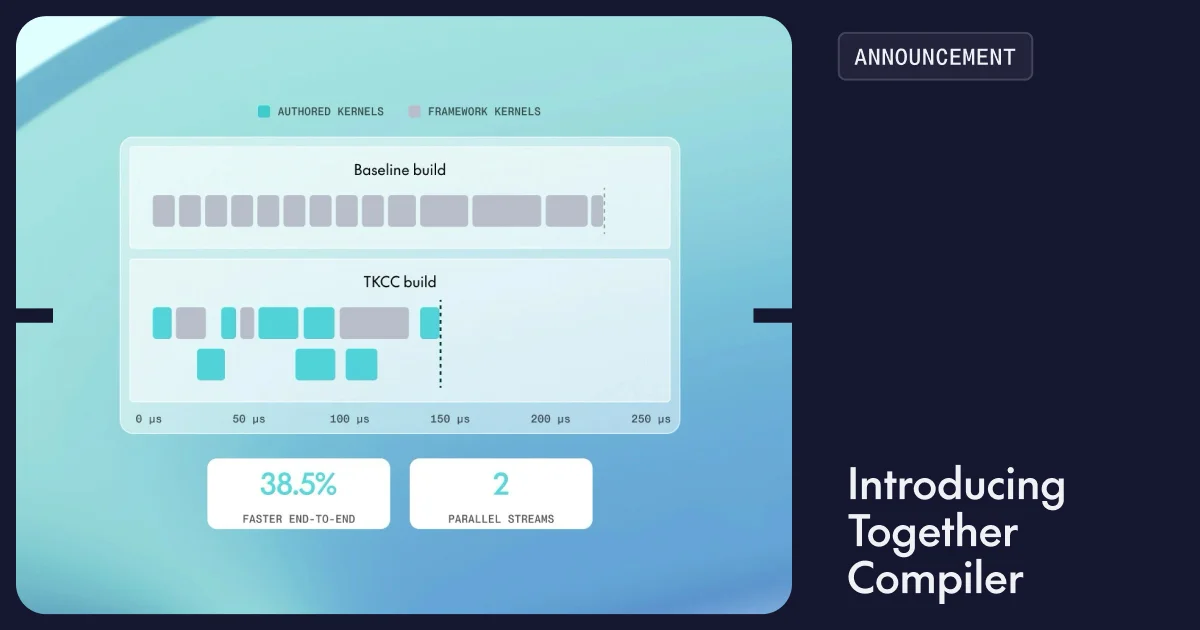
Together AI is using an agent-assisted compiler to search for faster ways to run AI inference, then evaluate candidate implementations against actual workload conditions. In its November 4 announcement, the company calls the approach continual compilation: optimization continues after an initial deployment rather than ending at build time.
The idea matters because a model serving system is not a single fixed calculation. Different prompts, batch sizes, hardware and usage patterns can alter which implementation performs best. Together says its system proposes changes and tests them before selecting optimized implementations for its inference infrastructure.
Why this differs from a model release
The announcement concerns the machinery used to serve models, not a new set of model weights. A faster inference path may improve throughput or latency, but a result depends on the particular model, hardware and traffic tested. Together's published figures are company measurements; they are not an independent benchmark or a promise of identical savings for every customer.
The company's technical paper, submitted November 10, gives developers a closer look at the optimization approach. As with any automated code-generation system, candidate validation and operational safeguards matter as much as a compelling speedup.
Our view: the interesting question is whether continuous optimization can deliver consistent improvements without making serving systems harder to audit or maintain. AiBrainWorX has not independently tested the compiler or its performance claims.
Original reporting; primary sources reviewed November 14, 2026. No independent hands-on test claimed.