If you have ever downloaded a 4-bit GGUF file so a 27B or 32B open-weight model could fit into 16 GB or 24 GB of memory, you have relied on post-training quantization. Understanding what compression actually changes helps explain both why 4-bit works surprisingly well—and when it unexpectedly breaks.
Rounding billions of weights into smaller buckets
Most neural networks are trained in 16-bit floating point (BF16 or FP16), where each weight takes two bytes. Quantization groups blocks of weights together, stores a shared scale factor, and maps each number onto a tiny integer grid—for example, 16 possible values in 4-bit precision. That cuts static model weight memory by roughly 4x and reduces the memory bandwidth needed to read each token.
Why context length still eats memory
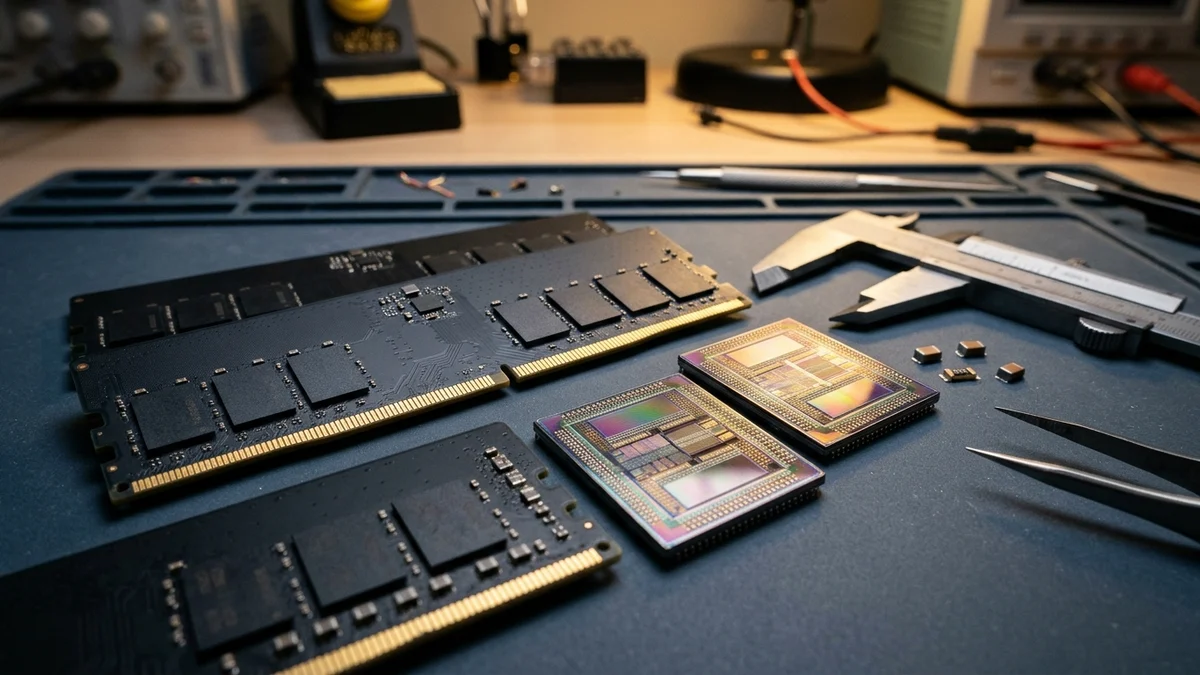
A common surprise for local builders is that quantizing model weights does not automatically shrink the KV cache—the working memory a model uses to remember your conversation. Long 64K or 128K prompts can still push memory usage past your budget unless the runtime also quantizes or caps the KV cache.
Where compression hurts first
In practice, everyday prose and summarization tolerate 4-bit quantization well, while strict JSON formatting, subtle multi-step math, and smaller 1B–4B models lose fidelity much faster if pushed down to 2-bit or 3-bit formats.
Original AiBrainWorX long-form editorial feature published November 16, 2026.