Before Behringer was a name on studio desks, its founder was a musician who wanted instruments he could not buy. The story is powerful because the starting point is familiar: being close enough to hear what a machine can do, but unable to take it home.
The music-shop story, in his own recollection
In a birthday statement reproduced by Bonedo on April 13, 2021, Uli Behringer remembered spending his spare time trying synthesizers and drum machines in music stores. Owners eventually sent him away because he could not afford them. This is his account of those experiences, rather than an independently documented incident at a named shop. It was music stores he described, not a record store.
His recollection connects piano lessons and electronics repairs with earning a living as a musician. The equipment shortage affected his friends, too.
He began building gear at home, sharing it for component cost. He also credited other people’s help and acknowledged repeated setbacks. This was not a story of success achieved alone.
Turning a need into a manufacturer
Behringer’s company history dates its founding to 1989. The manufacturer describes its early purpose as supplying equipment that a struggling musician and sound engineer could not afford for his own studio. Its timeline places his first homemade synthesizer, UB-1, at age 16 and his move to Düsseldorf to study piano and sound engineering in 1982.
That history helps explain why price remains central to the brand. It does not, by itself, establish the quality of any particular instrument. A founder’s motivation and a product’s reliability are different questions; neither a moving story nor a low price substitutes for a careful test.
Why KICK makes this story timely
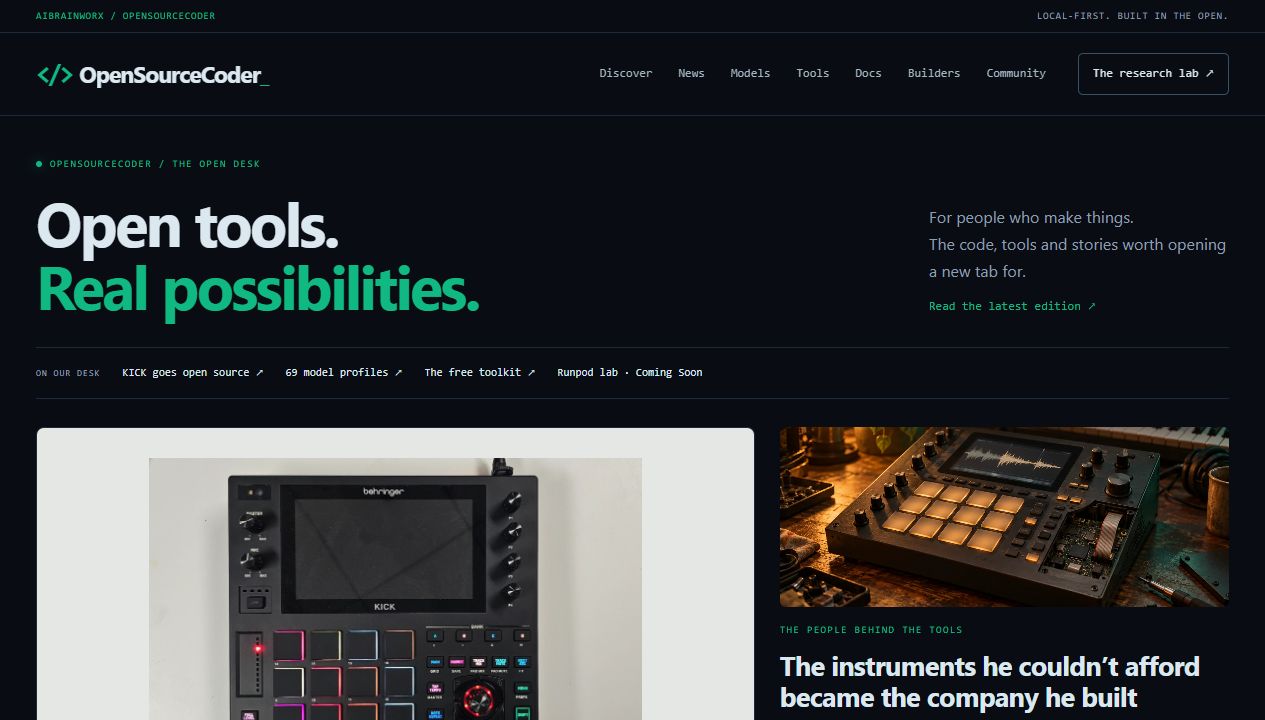
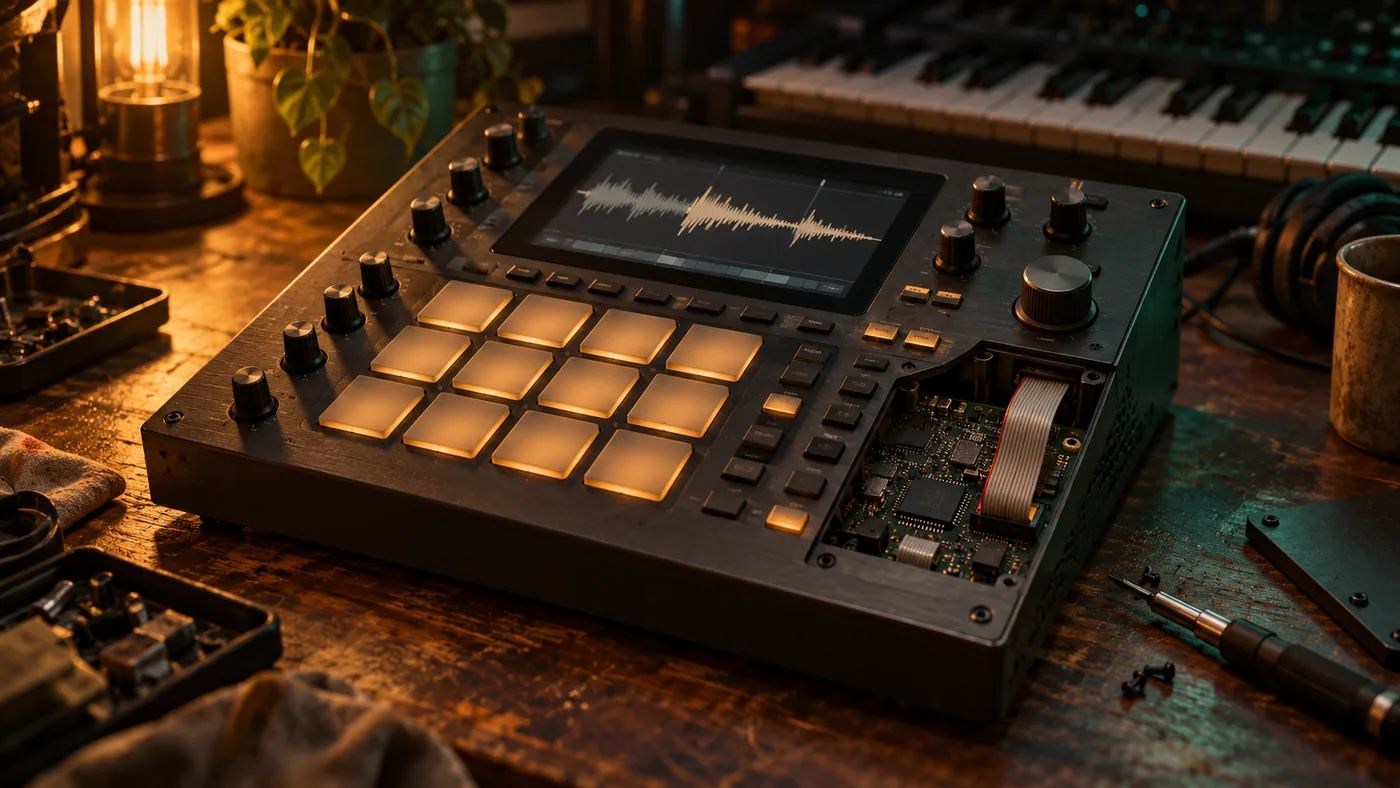
Music Tribe has now published KICK’s application, audio engine and hardware protocol source. Those components carry AGPL terms, alongside a separately licensed Linux build system. The official product images show a pad-based standalone workstation. We have not tested it, and source availability should not be confused with confirmed retail availability.
For a publication about building with technology, that is the interesting connection: access can mean being able to afford a tool, and it can also mean being allowed to understand and change how it works. KICK’s eventual value will depend on documentation, maintenance, the shipped hardware and what a community can actually build. The repository gives that conversation something concrete to examine.
Our view: the most useful tribute to this origin story is to keep asking the practical question that started it. Who gets to make things with these tools, and what still stands in their way?
Original AiBrainWorX reporting and analysis. Sources checked October 28, 2026. No hands-on hardware or firmware test is implied.