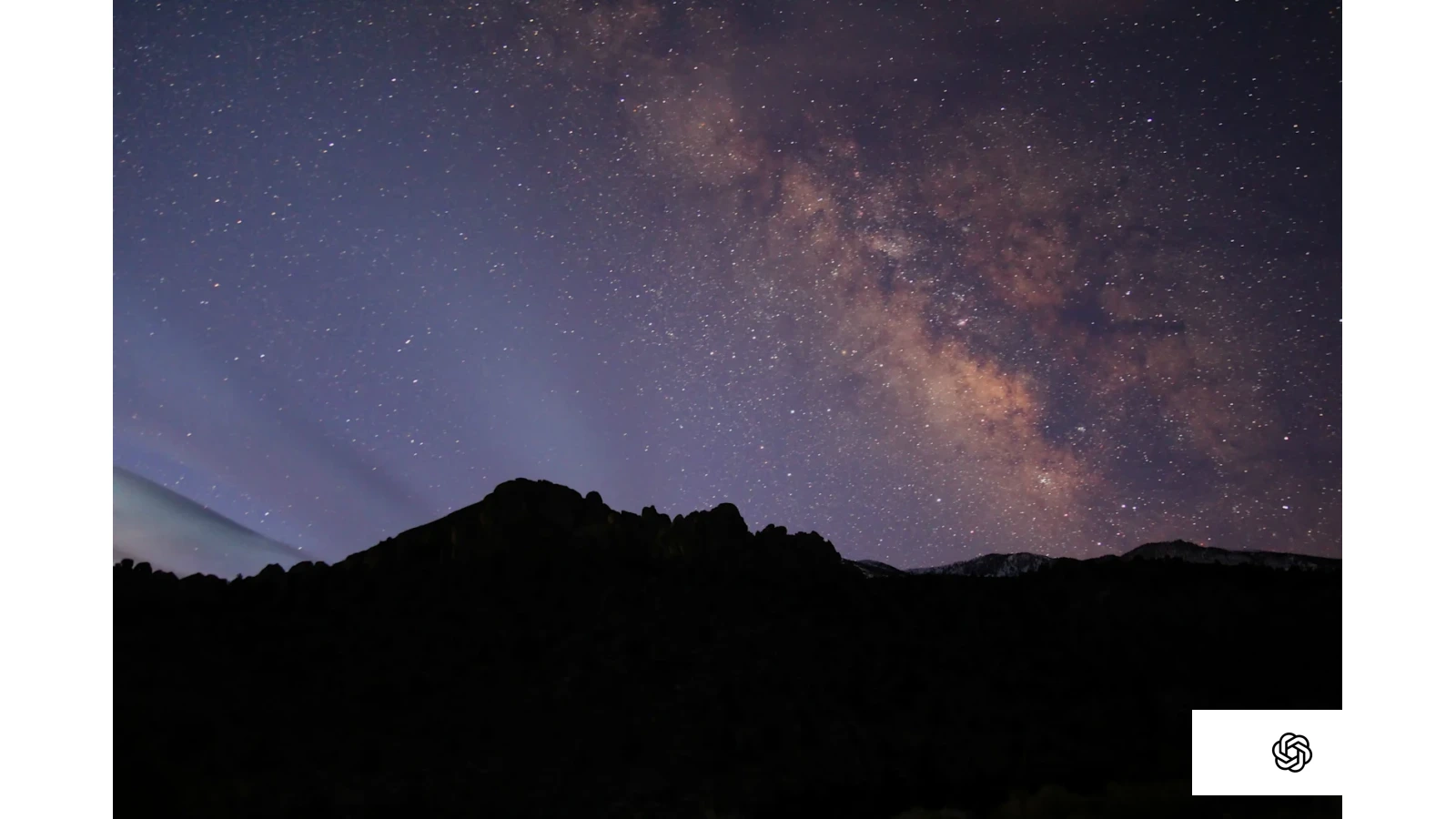

Two amateur astronomers used Codex and Astra to develop searches of public telescope observations and identified signals worth further investigation, according to OpenAI's November 24 report. The important result is a set of candidates for astronomers to examine, rather than newly confirmed planets.
OpenAI describes two independent efforts. Engineer Kevin Bond used Codex while searching Kepler observations of roughly 100,000 stars. Startup founder Ethan Byrd used Astra to help design searches spanning observations of around 19 million stars from TESS and other archives. These are publisher-reported search scopes, not measurements independently reproduced by AiBrainWorX.
A repeating dip is a testable hypothesis
A transiting planet can block a small amount of its star's light. Folding observations around a repeating period can make a weak pattern easier to inspect. NASA's exoplanet detection overview explains transit measurements and the role of complementary observations in characterizing distant systems.
Bond's program flagged more than 200 signals, including ten associated with previously confirmed planets, according to OpenAI. Recovering known cases provides a useful check that a search can find relevant patterns. It does not establish the accuracy of every additional candidate or measure a complete false-positive rate.
The report highlights KIC 5689121, with a recurring dip near 13.8 days, and KIC 6691030, with one near 4.8 days. OpenAI says an astronomer at the SETI Institute independently found the same two signals. That corroborates the presence of signals in the data as described; it is not confirmation that a planet caused either one.
Byrd's first pass yielded 49 candidates. The report says one strong candidate was sent to TESS researchers for further analysis and two others were awaiting submission. Those stages should stay distinct: identified, submitted and confirmed are different evidentiary states.
What AI changes, and what it does not
The described assistance includes comparing published search methods, writing analysis software and checking candidate signals. Possible alternatives to a planet include eclipsing stars and instrument effects. Additional observations and scientific assessment are needed to distinguish explanations; OpenAI notes that confirmation can take months or years.
Our analysis: AI can make an existing scientific workflow more accessible without replacing its validation process. The compelling development is the conversion of curiosity and public data into specific, inspectable questions. Calling the signals discoveries before follow-up would erase the part that determines whether the interpretation is right.
This is also not the first use of AI in planet searches. NASA's 2017 Kepler announcement documents earlier neural-network-assisted work. The present story concerns general AI tools helping people construct searches, rather than establishing that AI-assisted astronomy began this year.
We read the primary report and NASA background. We did not analyze telescope data, reproduce either search or independently assess the candidates. The article reports research activity, not a new model release or a verified habitable world.
Original primary-source-reviewed reporting. No model weights, software installations, inference, cloud deployments or independent benchmarks performed.