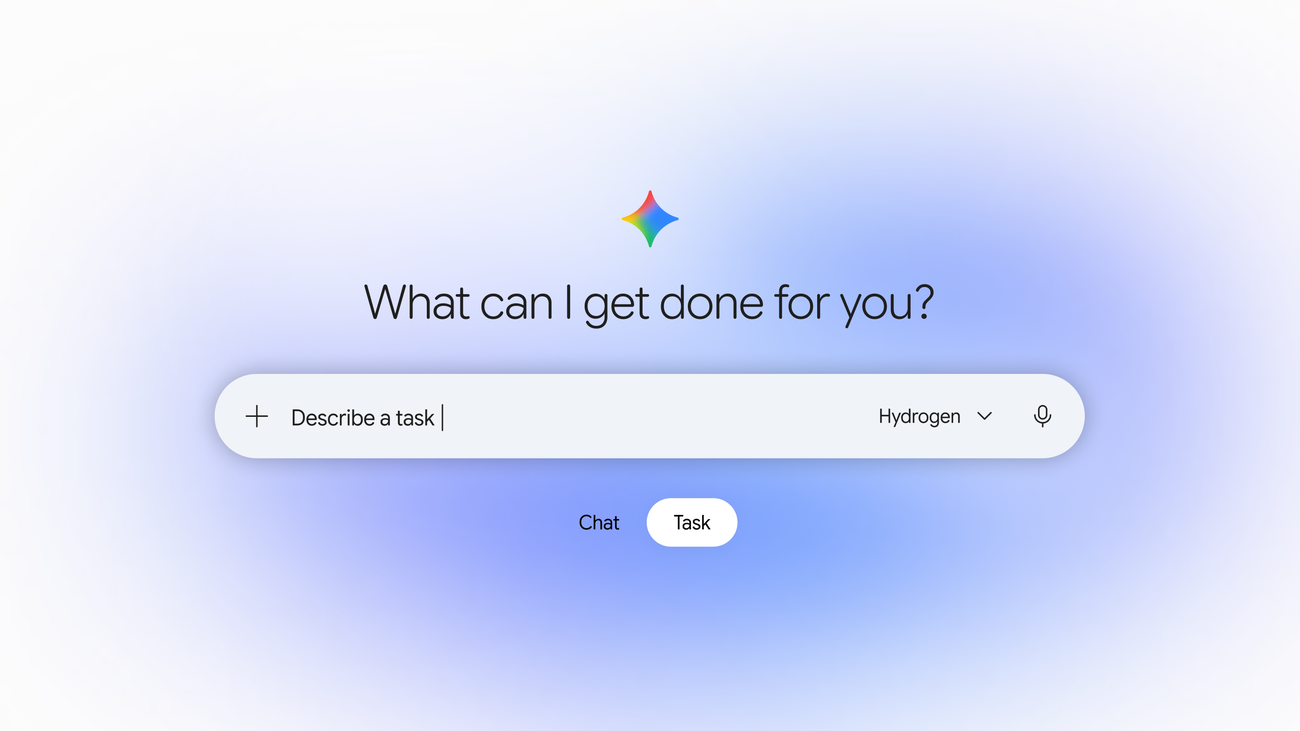

Google is expanding Gemini Tasks at no charge across the United States, Japan, Korea, Canada, Australia and India. Its November 17 announcement also introduces advanced capabilities starting in the U.S., including new calling, payment and messaging connections. Access remains a rollout with feature-specific conditions, rather than a promise that every user can immediately perform every demonstrated task.
The official announcement describes switching the Gemini app from Chat to Task to delegate work. It gives examples such as booking appointments and managing household administration. These are Google's demonstrations; we did not connect accounts, place calls, make purchases or run a task.
Country availability is not the whole eligibility check
Google says calling is not currently available in Indiana, Louisiana, Minnesota, Montana or Nebraska. The texting setup requires a U.S. phone number and an eligible carrier. Those conditions are narrower than the six-country free-access headline.
The company describes confirmation or pre-approval before purchases and controls for routine actions. It also says users can disconnect apps and change task settings. Its security explanation includes account-dedicated, hardware-isolated virtual machines and other defenses, but these remain publisher descriptions rather than an independent security audit by us.
Our analysis: delegation changes the permission question
When an assistant moves from explaining a task to acting on it, a successful answer is no longer the only outcome to assess. The user needs to understand what the assistant is allowed to change, which identity it uses, and how to inspect the result.
A convenient connection can increase the amount of context available to an agent. It also makes clear boundaries more valuable. Reading a document, adding a calendar entry and completing a purchase are different powers, even when they appear in the same conversational interface.
Confirmation is most useful when the user can see the consequential details before approving. A broad instruction to finish a task is not always enough to resolve an ambiguous preference. The quality of the handoff matters as much as the number of steps the agent can complete automatically.
A product update with acknowledged failure cases
Google explicitly says it has not eliminated mistakes: a task may fail, miss the intended result or hand control back for a final website action. That qualification should stay with examples that appear effortless in an announcement.
Free access to an assistant capability also does not make purchases or third-party services free. This article covers the rollout and stated controls; it does not evaluate shopping outcomes, financial decisions or account security. Readers should check the app's current eligibility and permission prompts rather than assume the announcement applies identically to their account.
Original primary-source reporting and labeled analysis. No model inference, installation, API submission, hardware test or independent benchmark performed.