
JetBrains' Mellum2.1 Instruct GGUF guide now recommends Q6_K among its published quantizations. The November 26 edit is useful deployment guidance, but it is not a new model-training announcement: the original instruction-tuned weights were uploaded November 17, and the official GGUF files November 19.
That timeline comes from the two repositories' public histories. We are covering the guide update and explaining the existing model, rather than presenting a recently edited card or a quantized build as a newly invented architecture.
Direct answers are the intended behavior
The original model card describes a 12B mixture-of-experts model with 2.5B active parameters per token. It is trained to answer directly rather than produce an externalized chain of thought, with coding-agent workers and shorter tool loops among its stated uses.
The active count concerns token computation, not the amount of model data a runtime must store. Its configured maximum context is 131,072 tokens; neither that limit nor the small active count establishes a particular device's memory use or long-context accuracy.
Quantization has several dimensions
The official guide lists Q6_K at 10.9 GB, Q4_K_M at 8.1 GB and MXFP4_MOE at 7.0 GB, compared with a 24.3 GB BF16 GGUF reference. These are file sizes in the publisher's table, not a promise that total GPU memory equals the download size.
Q6_K's recommendation also comes with publisher-reported distributional comparison metrics against BF16. A closer token-distribution match is not itself an application-level coding benchmark. The table does not prove that the recommended file is the best choice for every machine, context length or agent workload.
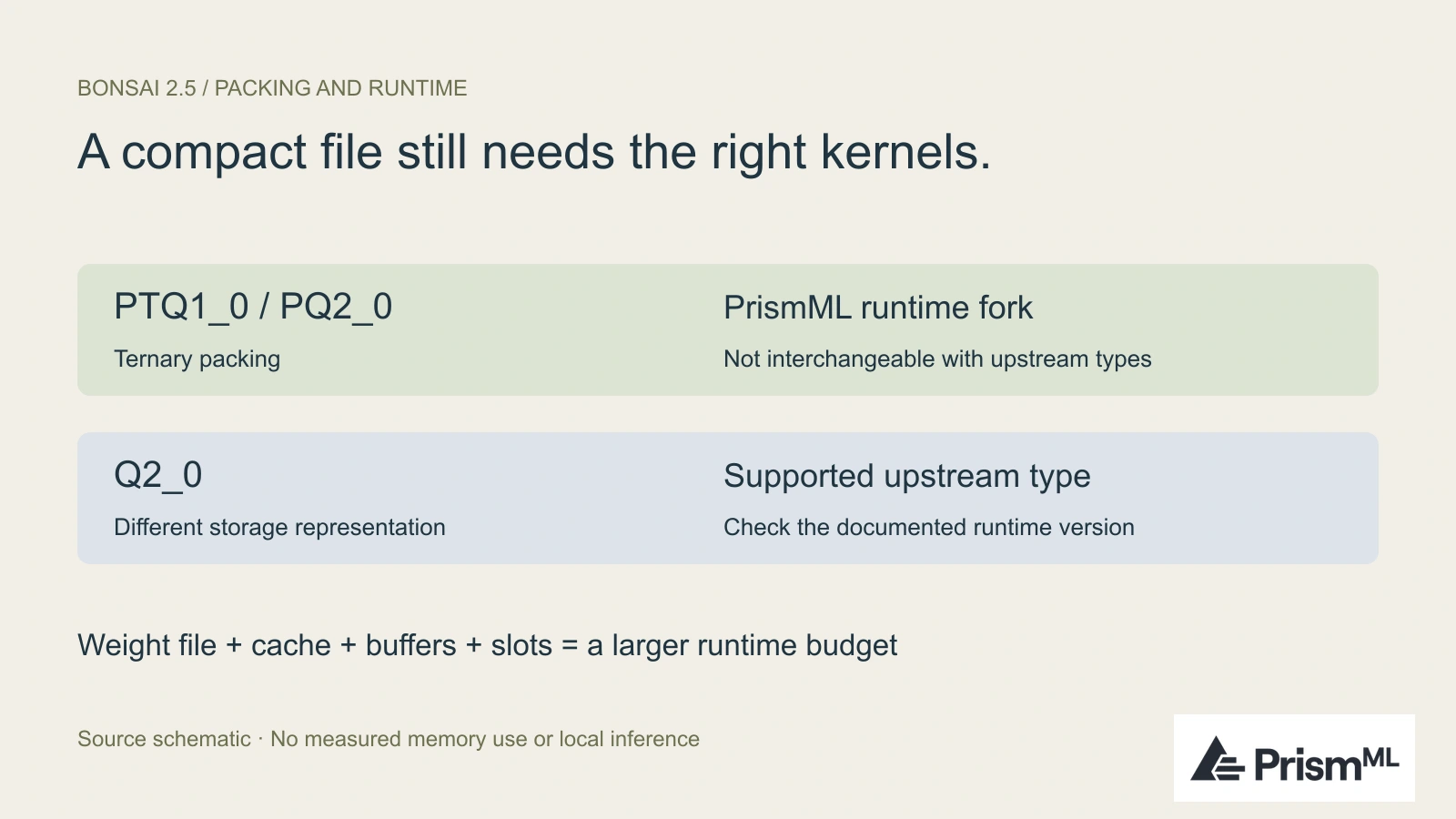
The repository separately describes draft and combined files for multi-token prediction. Selecting a packing and configuring speculative decoding are different decisions; a runtime also needs support for the model and the selected serving path.
Keep the evaluation conditions attached
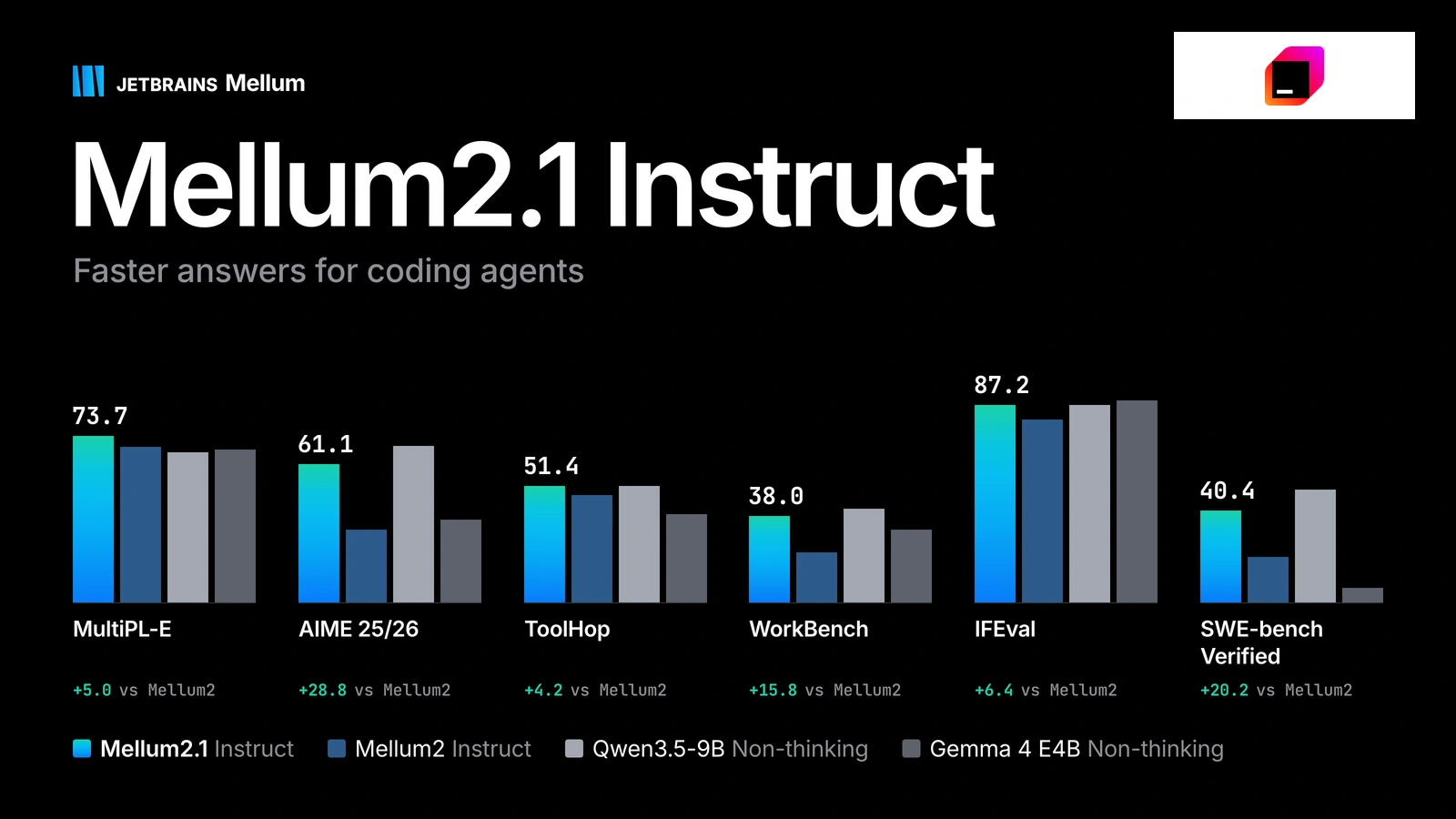
JetBrains reports 40.4% resolved on SWE-bench Verified for Instruct, versus 20.2% for its re-evaluated earlier Instruct model. The card identifies a common Pi harness, shell/file tools, a 114K-token context and up to 16K tokens per turn for its agentic evaluations.
These are self-reported results, not tests performed by AiBrainWorX, and the card's metadata marks the results unverified. A result under that harness should not be silently transferred to another agent, quantization or tool budget.
Our analysis: the local-model choice is a tradeoff between the full checkpoint's memory requirements, response style and the workload's tolerance for approximation. Direct answers may reduce visible output, but they do not guarantee that a task finishes sooner or with fewer retries. The guide helps identify candidate configurations; it does not remove the need for a representative evaluation.
Both publisher cards declare Apache 2.0; no standalone license file is listed in these model repositories. Our original-model profile and official GGUF profile preserve the exact identities and dates. The Transformers repository profile links the implementation framework, whose tagged Mellum module we inspected. No weights, inference, speed tests or coding benchmark were run.
EXPLORE THE SOURCE
Projects in this story
Model repositories
These are the exact public repositories referenced in the coverage. Public weights may have restrictions: check each publisher’s terms.
Original source-reviewed reporting. No software installed, model weights or datasets downloaded, inference, upstream tests, security audit, hardware qualification or cloud deployments performed.