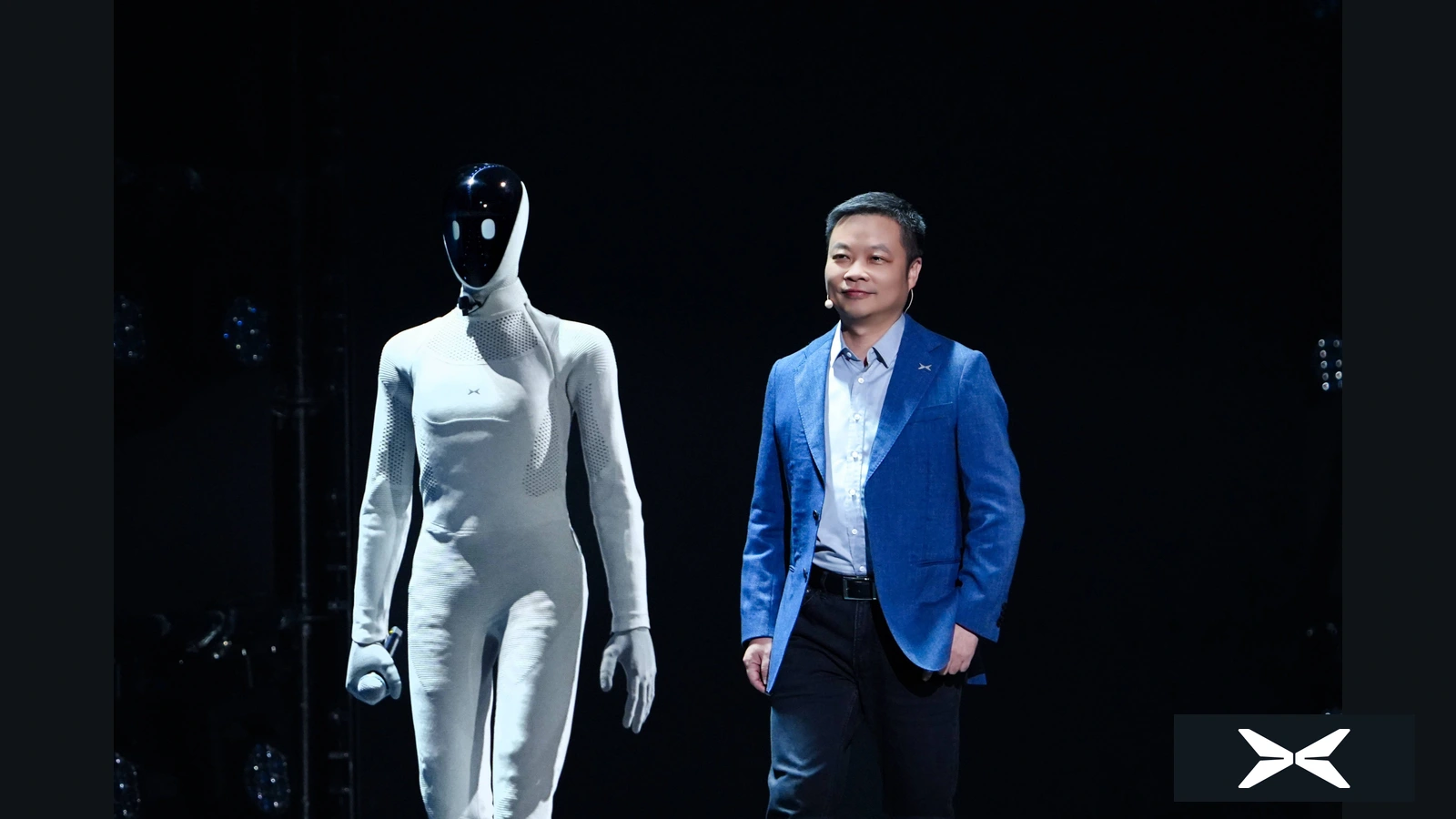

XPENG's November 25 AI Day announcement sets two milestones for its IRON humanoid: store-assistant training in the first quarter of 2027 and a targeted public release in the second quarter. These are company plans, not completed deployment dates or a guarantee of general availability.
The event also presents a shared physical-AI architecture for vehicles and robots. XPENG describes layers for body control, fast action and higher-level task planning, bringing hardware feedback into the same loop as perception and decision-making.
A store trial is different from a finished service
The announcement lists navigation, charging, task creation and operating-health monitoring among IRON's intended work capabilities. It also describes a data factory spanning more than 250 scenarios and 15 job categories. Those are publisher descriptions, not independently measured success rates.
Our analysis: a retail environment offers a more bounded test than an unrestricted household, but it still has moving people, changing layouts and incomplete instructions. The useful operational questions are how often a human intervenes, what tasks are refused, how failures are recovered and how performance changes outside a rehearsed scenario.
A training milestone does not answer those questions by itself. Nor does a stage demonstration establish safe operation around every customer or reveal the cost of staffing, maintenance and remote assistance.
Read the demonstration as a demonstration
XPENG's separate IRON product page showcases walking, coffee preparation and other capabilities. Its promotional demonstrations provide examples to inspect, rather than a standardized reliability comparison across robot manufacturers.
The official data-factory video below was published November 26. It is relevant background from XPENG's own channel; we verified the uploader and video identity, without treating the clip as an independent audit of autonomy or data quality.
XPENG calls its partner direction an open robotics ecosystem. That wording alone does not establish an open-source license, downloadable model weights or permission to reuse the underlying robot software.
Our view: the meaningful next evidence is repeated performance in the planned stores, with the intervention rate and operating conditions disclosed. Treat the 2027 dates as milestones to revisit against that evidence. We reviewed the announcement, product material and official video metadata; we did not operate IRON or verify its safety, availability, costs or performance independently.
Original source-reviewed reporting. No software installed, model weights or datasets downloaded, inference, upstream tests, security audit, hardware qualification or cloud deployments performed.