
The Mind2Act World report, submitted November 19, studies a practical question for embodied AI: did a robot fail because it forgot something, executed a movement badly, or failed to connect a decision with what happened next?
The benchmark contains 30 simulated manipulation tasks, divided between memory-oriented reasoning, precise physical execution and tasks combining the two. Three difficulty levels and two scene settings produce 180 configurations. The project history records website and leaderboard milestones on November 9–11, so the new technical report should not be confused with the first appearance of the project.
A more informative question than a single aggregate score
The authors compare multimodal agents, vision-language-action systems and world-action models. Their diagnosis harness follows where failed episodes first break down and summarizes selected systems in profile cards. These are reports about evaluated systems, not newly released model checkpoints.
In the paper's strongest-agent result, success drops sharply on combined tasks compared with the separate views. That pattern supports investigating the handoff between remembering, choosing and acting. It does not by itself prove a universal explanation for robotic failure.
The benchmark's limits are central to interpreting it
The authors explicitly note that the three views are different sets of tasks, rather than controlled interventions on an otherwise identical task. Combined workflows are longer. Difficulty, horizon and early execution errors can therefore help explain a low score alongside the composition problem.
Simulation pauses while models perform inference. Agents also receive motion-planning tools and a larger physics budget than end-to-end policies, and the two groups have separate leaderboards. A successful timed action under that setup is not evidence that a system can react with the same reliability in real time.
The study uses one bimanual simulated platform and a limited selection of systems. Transfer to physical robots has not been measured. Those boundaries are especially important when discussing factory, home or safety-sensitive applications.
Our analysis: diagnosis is useful when it leads to a testable change
A failure category becomes valuable when a developer can use it to make a specific improvement and rerun a meaningful comparison. Otherwise, a detailed scorecard can become another label attached to an opaque result. The report's proposed feedback and follow-up studies offer a direction for that work, rather than evidence that the improvement loop is already complete.
We have added a repository profile so readers can examine the tasks and setup. Original contributions use MIT terms, while assets, model weights and dependencies retain separate permissions. The repository's third-party notices are explicit about those boundaries.
The official site includes task demonstrations and diagnosis material. We reviewed the report, repository and notices; we did not install the simulator, execute its evaluation or validate performance on a physical robot.
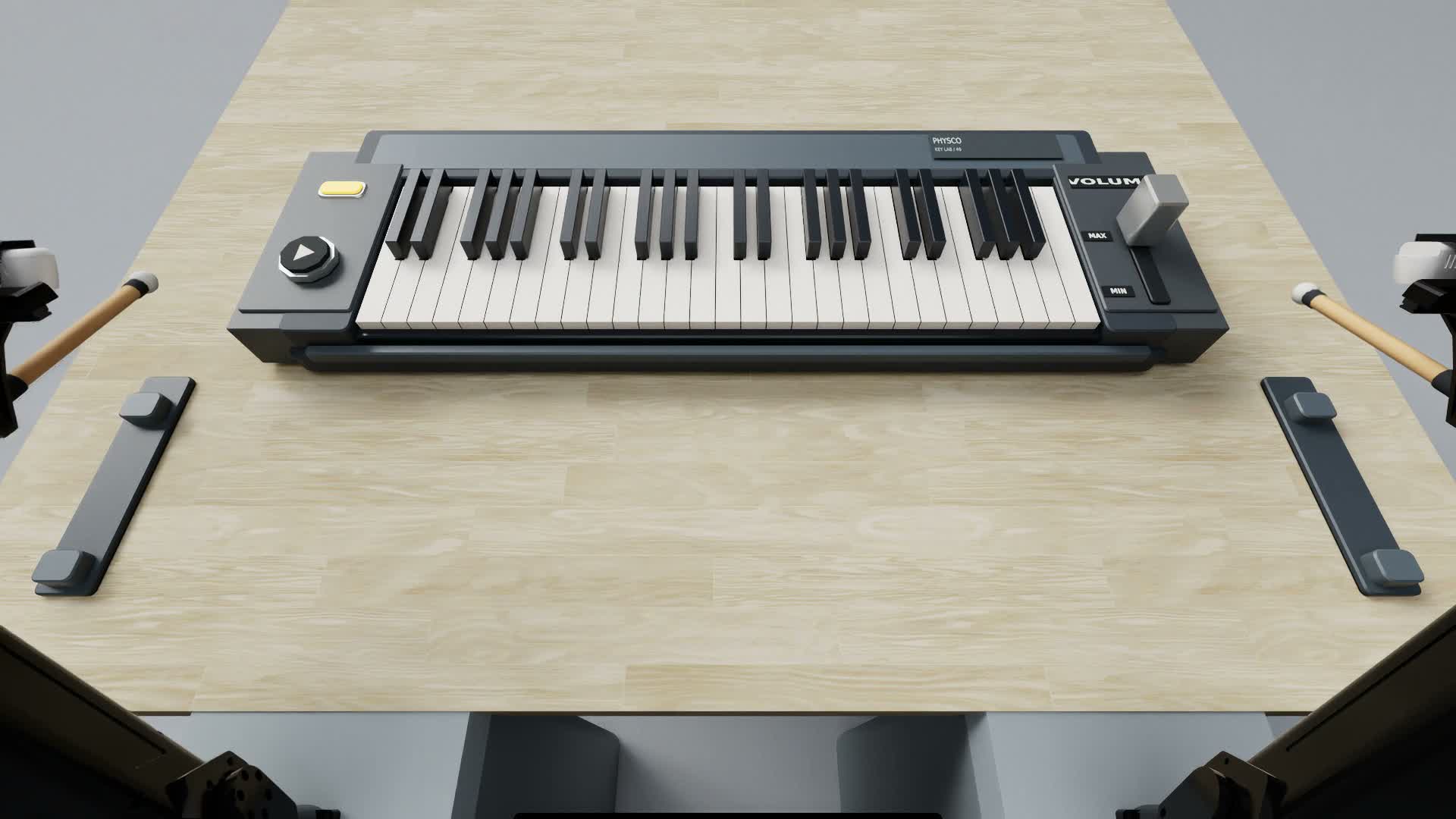
Official task demonstration
This publisher-hosted simulation clip illustrates the project's tabletop task. It is background demonstration material, not an AiBrainWorX evaluation or footage of a physical deployment.
Watch the official simulation clip or visit the publisher project page.
EXPLORE THE SOURCE
Projects in this story
GitHub repositories
- Mind2Act/Mind2Act_World ↗View project details
Original primary-source reporting and editorial analysis. No deployment, model download, inference, paid service call or independent performance test performed.