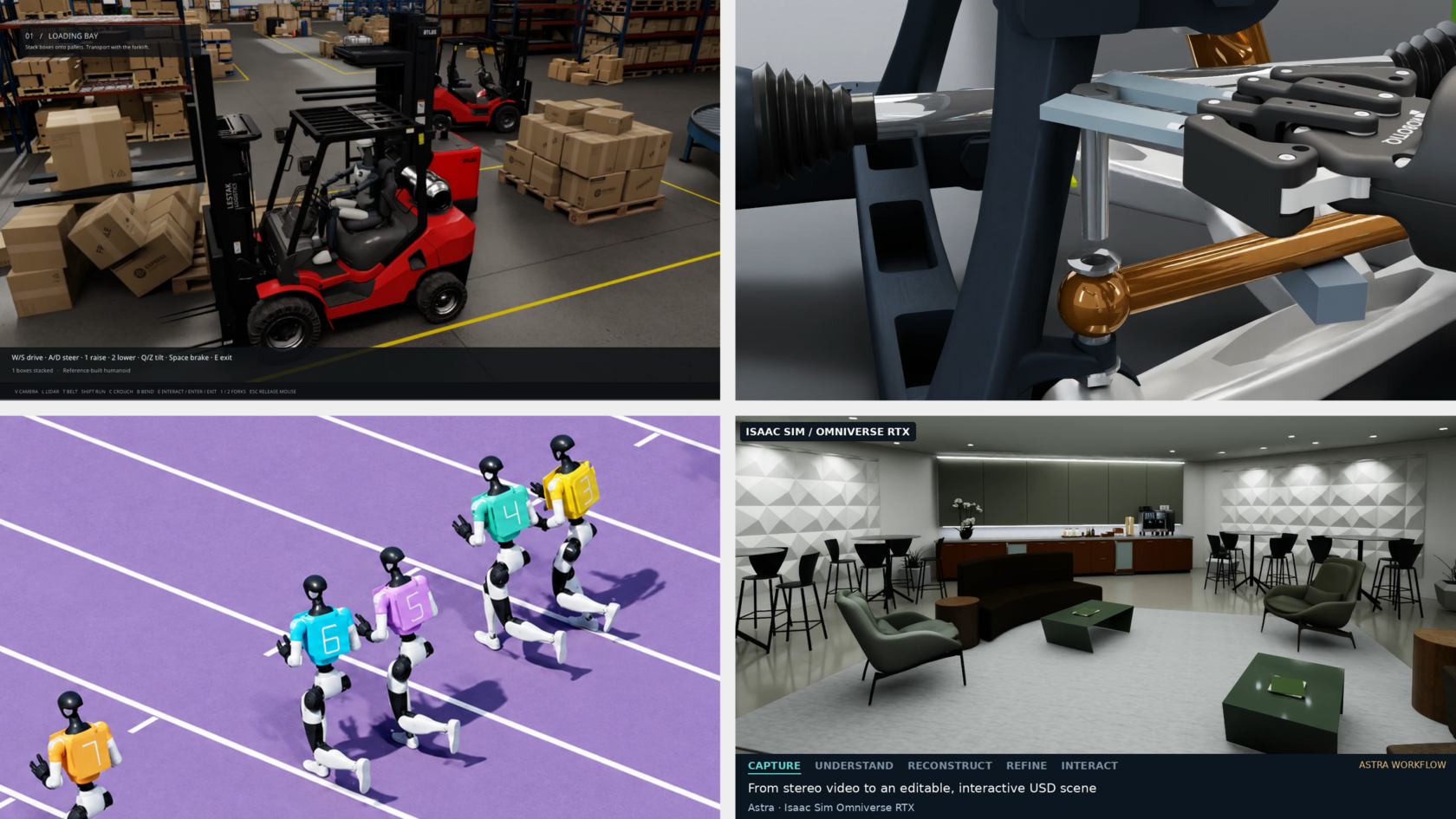
NVIDIA's November 19 simulation showcase describes developers using AI agents to assemble scenes, connect physics and rendering, and iterate on failures. The examples span industrial digital twins, robot manipulation and virtual reality. They are development demonstrations, not a release of a single new model or proof of autonomous real-world engineering.
The official post emphasizes a human-directed workflow: developers give instructions, inspect results and guide corrections. That distinction is especially clear in a voice-controlled VR application whose automated tests missed a problem its creator could feel in the headset.
When a passing test misses a bad interaction
Michael Wagner used agents to model an environment and build an application around Omniverse libraries and SimReady assets. NVIDIA reports that objects shook when grabbed, despite the automated checks. Wagner described the symptoms, directed revisions and checked the experience himself; updating the grab control once per frame resolved the shaking.
The public demonstration repository supplies implementation details and limitations. Its own code and documentation carry MIT terms; NVIDIA libraries and downloaded assets retain their separate licenses. Our repository profile records those boundaries. Public source does not make every dependency unrestricted.
Our analysis: inspect the experience the software promises
This example is useful because the failure sits between software correctness and a person's experience. A scene can load and objects can respond while the interaction still feels wrong. A test suite only establishes the properties it actually checks.
Agent-assisted development can make it faster to propose a fix, but it does not remove the need to identify the right failure. Screenshots and logs are valuable evidence; for a headset interaction, they may be incomplete. The person trying the application contributes information the existing tests did not capture.
The same reasoning applies to robotic simulation. A visually plausible motion and a successful simulated interaction are observations about that setup. They should not be promoted into claims of real-world safety or reliability without additional evidence.
An inspectable example, with hardware limits
The VR project's documentation describes a Windows workstation and Quest workflow, with versions pinned because the libraries evolve. Its reported setup does not establish a minimum GPU requirement or guarantee consumer-device fit. We did not install the demo, wear a headset or reproduce the creator's measurements.
The official presentation below is older background from NVIDIA Omniverse, published October 1. It is linked from the November showcase and helps explain the workflow; it is not footage newly published on November 19.
EXPLORE THE SOURCE
Projects in this story
GitHub repositories
- perfectproducts/ovxr_simready_physx_demo ↗View project details
Original primary-source reporting and labeled analysis. No inference, software installation, API evaluation or independent benchmark performed.