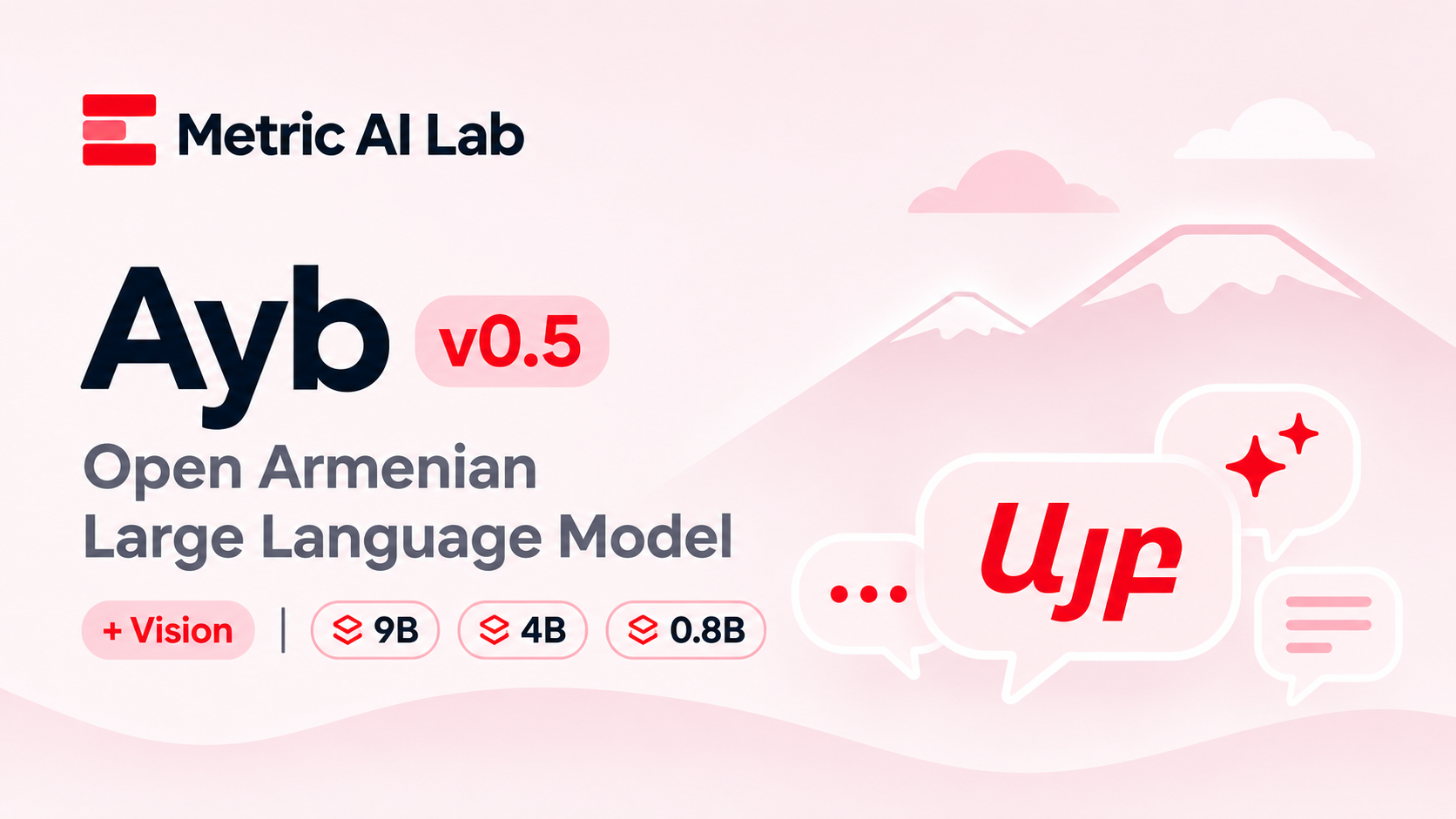
Armenian research team Metric-AI has announced OhanTTS-v0.1, a text-to-speech model focused on Armenian and supporting reference-voice generation. Its November 20 announcement describes incremental audio output and a serving recipe, but access and licensing need to remain clear: the model repository uses a manual gate and declares non-commercial terms.
The publisher's report describes further training on about 160 hours of recordings across eight languages, including 61 hours of Armenian. The public repository metadata identifies the checkpoint and license. We did not request access or bypass the gate; anonymous attempts to read its protected card and files returned an authorization error.
Audio streaming is not incremental text input
The model receives the complete text request before returning audio in chunks. Metric-AI describes accepting text incrementally as future work. That distinction matters for applications expecting a language model to begin speaking before its answer is finished.
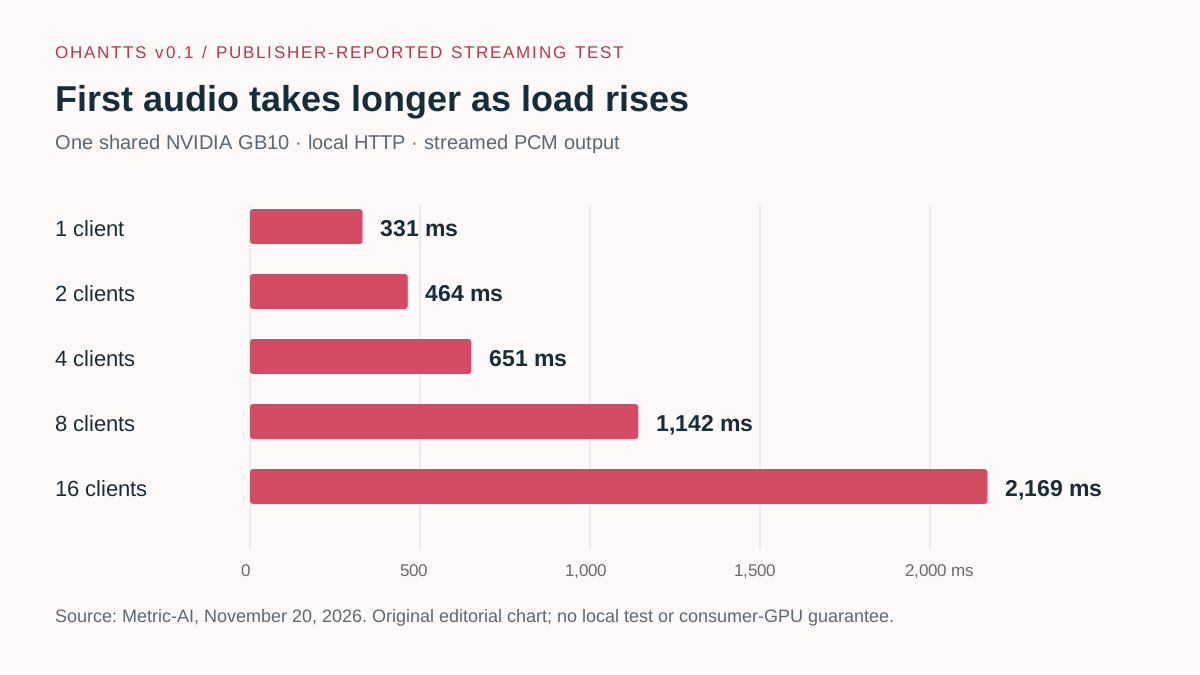
The publisher reports 331 ms to first audio with one client, measured over local HTTP on a shared NVIDIA GB10. At 16 concurrent clients, the reported delay rises to 2,169 ms. These are particular serving measurements, not a promise about network applications, CPU inference or every consumer GPU.
Our analysis: regional speech quality deserves its own evaluation
Language coverage is more than a list of supported languages. Punctuation, names, pronunciation and switching between languages can determine whether a speech tool is useful in practice. A small or regional release deserves scrutiny on those details instead of being judged solely by an English demo.
Metric-AI's stated limitations include Armenian punctuation, unfamiliar names, code-switching and longer utterances. It says each request produces roughly 20 seconds of audio at most and that longer input should be split. Those constraints help define what a fair application test would need to cover.
A low first-audio delay is only one part of the experience. Continuity, correctness and the amount of manual correction matter too. We have not listened to a controlled test set, measured speaker similarity or independently scored the generated Armenian.
Separate the serving code from model access
The official cookbook explicitly calls the checkpoint gated and documents the access step. Its serving repository is Apache-2.0, while the model's public metadata and announcement declare CC BY-NC 4.0. An open serving implementation does not remove the model's restrictions.
Our checkpoint profile records the gate and limited verification, and our code profile links the implementation. Reference recordings should be used with the speaker's permission, as the publisher requires. No software or weights were installed for this report.
Original source and implementation review with labeled editorial analysis. No model inference, installation, paid service, API benchmark or independent security/robotics test performed.